Books have always been a big part of everyone’s lives and societies. From fantasy to nonfiction, books provide portals for us to glimpse into different situations and scenarios.
For centuries, books have been particularly important to schools and their curriculum. Whether it would be a math textbook, an excerpt read aloud in English class, or a book required for summer reading, literature is present every day at any school, even in the smallest ways.
McNicholas high school, like any other school, holds literature in high regard. The community and faculty openly encourage reading for the student body through reading competitions, challenges, and having weeks like banned book week dedicated to celebrating specific types of books. McNicholas also has countless accessible e-books, and of course allows students the ability to check out any book they wish from the school’s very own library.
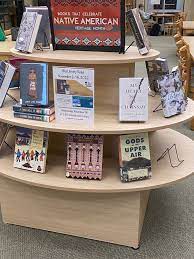
“Books have the ability to be mirrors, windows, and sliding glass doors,” the McNicholas’s librarian, Chelsea Almer, speaks her opinion on why literature is so important to not just high school students, but to everyone in the world.
“It’s really important for us to read books because it’s important for us to learn about ourselves and how to manage our own feelings and beliefs. It’s important to learn about others and how they believe in certain things or navigate their life,” states Almer.
In 2006, Keith Oatley and a few of his friends started an experiment to see how closely tied empathy and reading are. They rounded up a group of willing volunteers and tested them to see how often they recognized certain authors or special passages of literature. The more the volunteers recognized, the more they read, Oatley figured.
At the end, the people who knew most authors’ names or literature scored higher on the empathy test than those who struggled to put a name to who and what they were tested on.
Another study, one done in 2014, focused on elementary and high schools in the United Kingdom and Italy. The study showed that students who read books such as Harry Potter or Saffron Dreams, were more empathetic than their peers who did not read.
This is likely due to the insight reading offers to readers to show them a glimpse of others’ situations and lives. When specific stories are read, the readers can see how characters feel and act when in their situation. When people know how others feel in a situation that they’ve read, they can be more empathetic because they know how that situation may affect the person.
Experts from the American Academy of Neurology say that emotions aren’t the only part of humans affected by reading. Their studies show that since reading stimulates the brain so greatly, it slows down cognitive decline in old age.
Reading also builds vocabulary, which may sound mainly important to developing children, but is just as important to high schoolers as well.
“It is definitely true that, just as in any other discipline, the more you do something, the better you become at it,” Almer states. “It’s the same with reading. The more that you read, the better you become at that.”
Reading also contributes to writing abilities, as the more one reads, the more developed and comfortable their brain will get using certain techniques and vocabulary that they’ve read or seen before.
English teacher Julie Dill agrees. Dill states, “Students who read more tend to be better writers, as they are exposed to a variety of vocabulary and see rules of grammar and punctuation on the pages.”
Now, noticing this trend, McNicholas high school has implemented choice reading this year. Choice reading is the fifteen minutes English teachers allow their students to read a book of the students’ choosing to improve their reading skills on block days.
Dill states, “Most students seem to like the freedom to choose what to read, and ringing the bell to announce when they finish a book. With this ability of choice, I am hopeful that students will read more books and that they will come to enjoy reading.”
True to her hopes, members of faculty have noticed an uptake in many students’ reading habits because of this. Almer says that many students who weren’t big readers in the beginning have come to her asking for book suggestions similar to what they’ve picked up for choice reading in their class.
It seems that with the help of faculty’s ideas, students are improving, something that will likely continue happening as students grow with the English teachers’ and librarian willingness to help them.
 The McNicholas Milestone